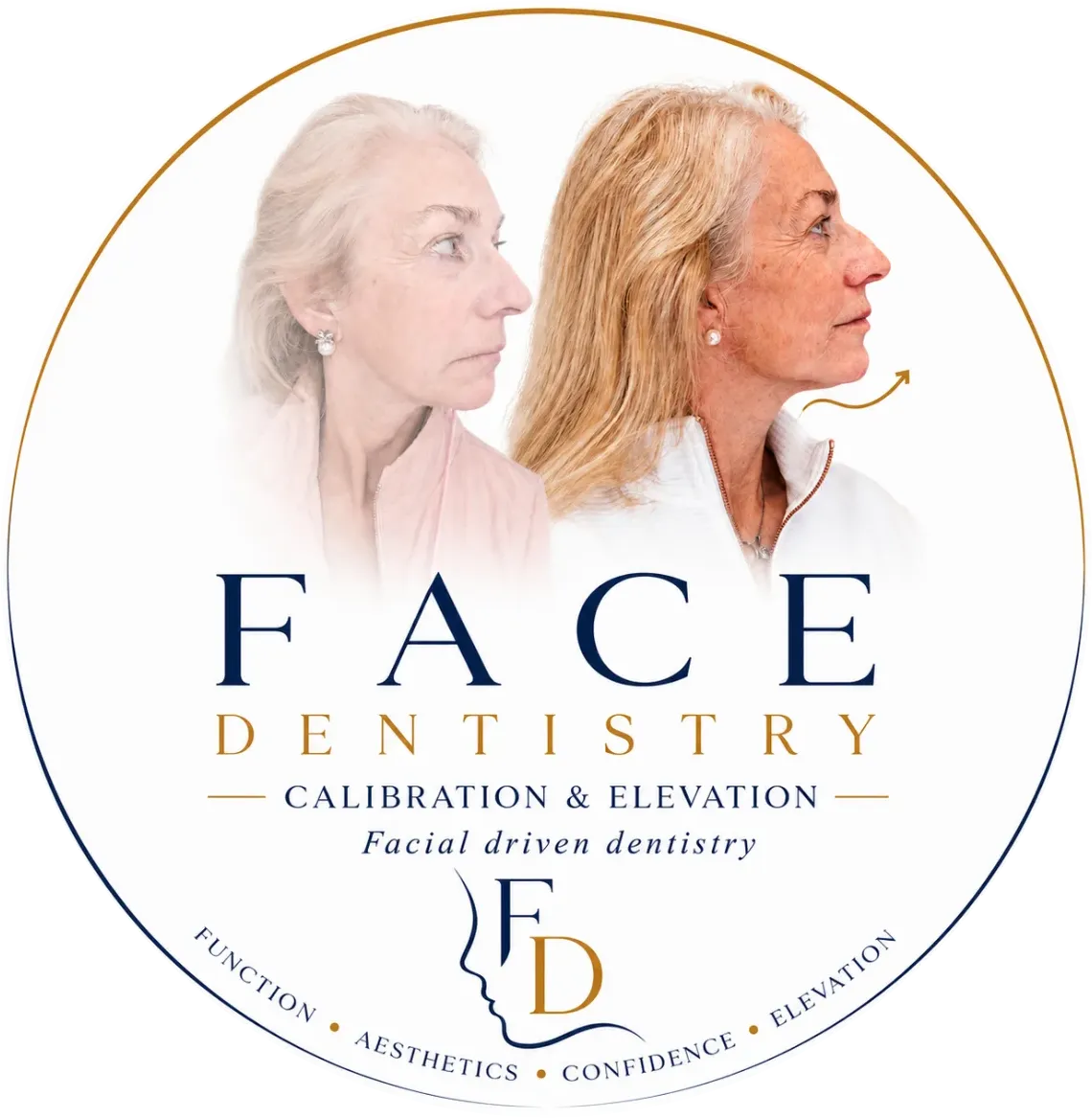
About FACE Dentistry · Beverly Hills
What Is Face Dentistry?
Face Dentistry looks beyond individual teeth.
What Is Face Dentistry?
Traditional cosmetic dentistry often begins with the teeth.
Face Dentistry begins with the face.
Face Dentistry is a comprehensive approach to dentistry that evaluates how the teeth, bite, jaw position, TMJ, chin projection, lips, smile and facial proportions work together.
Instead of simply asking, “How can we make the teeth look better?” we ask a much bigger question:
“Where should the jaw, bite and teeth be positioned to complement the entire face?”
For selected patients, what appears to be a cosmetic concern—such as a small or recessed chin, weak jawline, deep bite, overbite, underbite, open bite or protruding teeth—may involve the relationship between the upper and lower jaws and the way the teeth come together.
Face Dentistry evaluates these relationships before the final smile is designed.
The philosophy is simple:
The face leads. The dentistry follows.


Who Is Dr. Joseph Goodman?
Dr. Joseph Goodman is a cosmetic and general dentist in Beverly Hills with more than 25 years of clinical experience.
German-trained and U.S.-educated, Dr. Goodman has focused much of his career on advanced cosmetic dentistry, porcelain veneers, bite reconstruction, TMJ-related dentistry and comprehensive full-mouth rehabilitation.
His work has been featured on television programs including KTLA, The Doctors and Dr. Phil, and he served for many years as an official dentist for Miss California USA.
Over the course of his career, Dr. Goodman became increasingly interested in an important limitation of conventional cosmetic dentistry:
Beautiful teeth alone do not necessarily create the best facial result.
The position of the teeth and lower jaw can influence the appearance of the lips, chin, jawline and lower third of the face.
This led to a more face-driven approach to treatment—the philosophy behind Face Dentistry.
What Does Face Dentistry Do?
We evaluate the relationship between:
- The upper and lower jaws
- The bite
- TMJ and condylar position
- Chin projection
- Facial profile
- Lip support
- Tooth position
- Tooth proportions
- Smile design
- Lower facial height and proportions
- Function and comfort
This can be particularly important for patients concerned about a small or recessed chin, overbite, deep bite, overjet, underbite, open bite, facial imbalance or an aging-looking lower face.
Some patients initially seek consultations for procedures such as genioplasty, chin augmentation, chin implants, orthodontics, orthognathic jaw surgery or facelift procedures.
Face Dentistry provides another perspective: before changing the chin or face surgically, evaluate whether the bite and jaw relationship may be contributing to the appearance.
Not every facial concern originates from the bite, and not every patient can or should be treated dentally. Proper diagnosis and case selection are essential.
How Does Face Dentistry Work?
Step 1: We Start With the Face
The evaluation begins with facial proportions rather than simply looking at individual teeth.
We study the patient from the front and profile and evaluate the relationship of the chin, lips, jawline, smile and lower face.
We then examine how these facial characteristics relate to the existing bite and jaw position.
Step 2: We Evaluate the Bite and TMJ
The position where a patient's teeth currently meet is not automatically assumed to be the ideal position for treatment.
We evaluate the relationship between the lower jaw, the bite and the temporomandibular joints—the TMJs.
This is an important distinction.
Instead of designing cosmetic dentistry around the patient's existing bite alone, Face Dentistry investigates whether a different clinically appropriate jaw relationship may provide a better foundation for the final reconstruction.
What Is the TMJtrac System?
The TMJtrac System is part of the diagnostic process used in Face Dentistry to evaluate and record jaw movement and jaw position.
The TMJ—the temporomandibular joint—is the joint connecting the lower jaw to the skull.
Because the lower jaw is movable, its position can affect how the upper and lower teeth meet and can also influence the appearance of the chin, lips, jawline and facial profile.
TMJ tracking provides additional information about mandibular movement rather than relying exclusively on a static bite.
The information is considered together with the clinical examination, bite analysis, photographs, imaging and other diagnostic findings.
The technology does not determine treatment by itself.
It is a diagnostic tool that helps Dr. Goodman evaluate the relationship between jaw movement, bite and facial position.
Can I Preview the Result Before Treatment?
Yes — The Face Dentistry “Test Drive”
One of the most important concepts of Face Dentistry is allowing the patient to preview a proposed change before committing to definitive treatment whenever clinically possible.
Using diagnostic records, digital planning, imaging and a provisional or simulated jaw and bite position, the patient may be able to see and experience how a proposed change could affect the relationship between the:
Chin • Lips • Jawline • Teeth • Smile • Facial profile
This is what we call the Face Dentistry Test Drive.
Instead of simply being told what the final result might look like, the goal is to give the patient a meaningful preview of the proposed direction.
The preview is a planning and communication tool and should not be interpreted as a guarantee that the definitive result will be identical.
What Can Face Dentistry Improve?
Depending on the patient's anatomy, diagnosis and treatment needs, Face Dentistry may address several areas simultaneously.
Facial Profile
Changing the relationship of the teeth and lower jaw can sometimes change how the chin and lower face are visually perceived.
Chin Projection
In selected patients, a recessed-looking chin may be associated in part with the position of the lower jaw and bite.
Jawline
A different mandibular relationship may influence the visual transition between the chin, jaw and neck.
Overbite and Deep Bite
Face Dentistry evaluates not only the amount of overbite but how the upper and lower jaws and teeth relate to the overall facial structure.
Overjet
When the upper teeth appear excessively forward relative to the lower teeth, the entire jaw relationship should be considered before cosmetic treatment is planned.
Underbite
Patients with a Class III relationship require careful diagnosis to determine whether dental treatment, orthodontics, surgery or a combination of approaches is appropriate.
Open Bite
An open bite may have dental, skeletal, muscular or functional causes. Understanding the cause is essential before determining treatment.
Smile and Tooth Proportions
Once the facial and bite foundation has been established, the teeth can be designed to complement the new relationship.
How Is Face Dentistry Different From Traditional Cosmetic Dentistry?
Traditional cosmetic dentistry may focus primarily on creating attractive teeth.
Face Dentistry asks another question first:
Where do those teeth belong in relation to the face?
That distinction can influence everything that follows.
The position and shape of porcelain restorations are not planned in isolation. They are considered in relation to the jaw position, lips, chin, facial profile, smile line and bite.
This is why we describe the approach as:
Face-Driven Dentistry
We don't simply design teeth. We design the dentistry around the face.
Is Face Dentistry an Alternative to Genioplasty or Jaw Surgery?
For selected patients, it may provide a nonsurgical dental treatment option worth evaluating.
However, Face Dentistry is not a replacement for every chin augmentation, facelift, orthodontic treatment or orthognathic surgery.
Some patients have skeletal conditions for which orthodontic treatment, oral and maxillofacial surgery, plastic surgery or other specialist care may be the appropriate treatment.
The purpose of a Face Dentistry consultation is to determine what is actually contributing to the patient's concern before deciding how it should be treated.
A patient considering a chin implant or genioplasty because of a recessed-looking chin, for example, may benefit from having the bite and lower-jaw relationship evaluated first.
Why Evaluate the Jaw Before Designing the Smile?
Because the teeth, bite and face are not independent structures.
Move or change one part of this system and the relationship of the other parts may change as well.
That is why extensive cosmetic dentistry should not always begin with choosing the color or shape of porcelain veneers.
It should begin with diagnosis.
Face first. Jaw second. Bite third. Smile design follows.
Who Is a Candidate for Face Dentistry?
A Face Dentistry evaluation may be appropriate for someone concerned about:
A small or recessed chin • weak-looking jawline • overbite • deep bite • overjet • underbite • open bite • worn or collapsed teeth • facial profile • previous unsuccessful cosmetic dentistry • or extensive full-mouth reconstruction.
It may also be valuable for someone who has been considering genioplasty, a chin implant, orthodontics or jaw surgery and wants to understand whether the bite and jaw relationship are contributing to the appearance.
Every patient is different.
A comprehensive examination is necessary to determine whether Face Dentistry is appropriate and what treatment options may exist.
Face Dentistry — The Facelift of Dentistry
The goal of Face Dentistry is not simply to create whiter or straighter teeth.
It is to understand how the face, jaw, TMJ, bite and smile function as one system and then design treatment around that relationship.
For the right patient, this can mean looking beyond the smile and considering the entire lower face.
Face Dentistry
The Facelift of Dentistry
Face-Driven Dentistry.
Designed Around the Face
Built Around the Bite.