FACE Dentistry · Beverly Hills
Crossbite Correction Without Jaw Surgery | Face Dentistry
Correcting a Crossbite by Repositioning the Bite Into a Class I Relationship
A crossbite is more than a problem with crooked teeth. It can affect how your upper and lower teeth fit together, how your jaw functions, and even the appearance of your chin, jawline, and facial profile.
At Face Dentistry, Dr. Joseph Goodman takes a different approach to crossbite correction. Instead of focusing exclusively on straightening individual teeth, he evaluates the relationship between the upper and lower jaws, the position of the chin, the temporomandibular joints (TMJ), and the overall facial structure.
The goal is to establish a healthy, stable, functional bite, ideally with a Class I dental relationship, while creating better harmony between the teeth, jaws, and face.
For selected patients, this may be possible without traditional braces or invasive jaw surgery.
What Is a Crossbite?
A crossbite is a type of dental malocclusion in which one or more upper teeth bite inside the lower teeth instead of fitting in their normal relationship.
In a properly aligned bite, the upper teeth generally overlap the lower teeth slightly, allowing the teeth to function together during chewing and speaking.
When a crossbite is present, this relationship is disrupted.
There are several types of crossbites:
Anterior Crossbite — When the Lower Front Teeth Are in Front
An anterior crossbite occurs when one or more lower front teeth sit ahead of the upper front teeth when biting together.
This can sometimes create the appearance of a protruding lower jaw, an underbite, or an unbalanced facial profile.
In some cases, the problem is primarily dental. In others, it involves the underlying skeletal relationship or a functional shift of the lower jaw.
Posterior Crossbite — When the Back Teeth Do Not Fit Properly
A posterior crossbite occurs when the upper back teeth bite inside the lower back teeth.
This may affect one side or both sides of the mouth and can be associated with uneven tooth contacts or a sideways shift of the mandible.
Functional Crossbite — When the Jaw Shifts to Find a Bite
Some patients develop a crossbite because their teeth interfere with the natural closing path of the lower jaw.
As the teeth come together, the mandible may shift forward or sideways to achieve maximum tooth contact.
This is particularly important because the position in which the teeth fit together may not necessarily represent the most appropriate position for the jaw joints and muscles.
Face Dentistry evaluates the difference between the patient's habitual bite and a potentially more stable, comfortable jaw position.
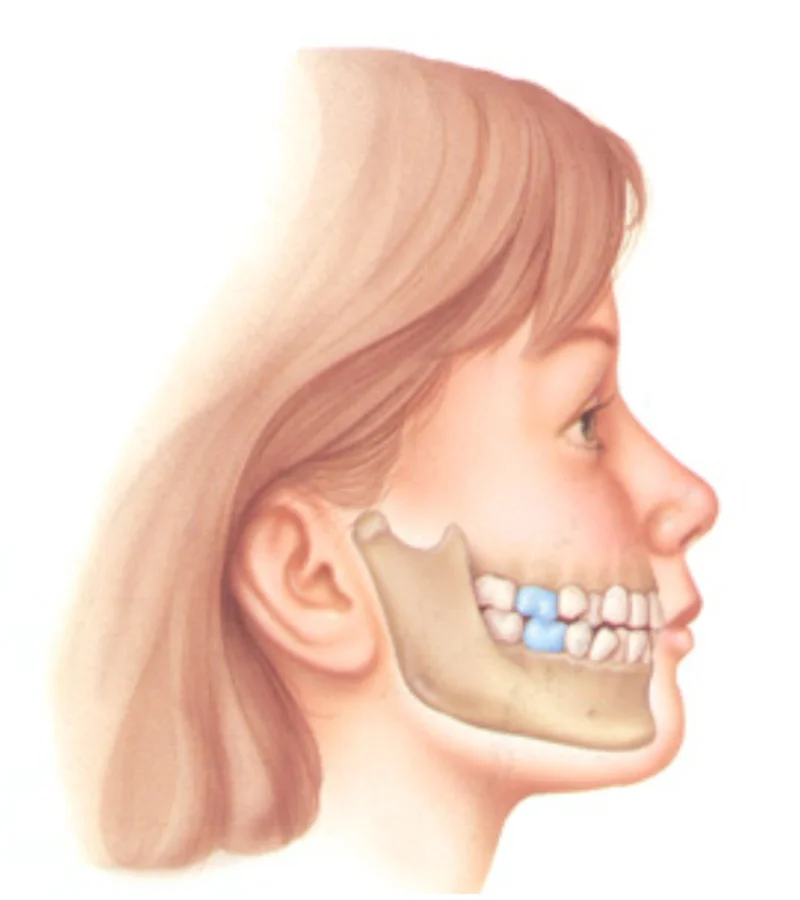 Class 1 ideal
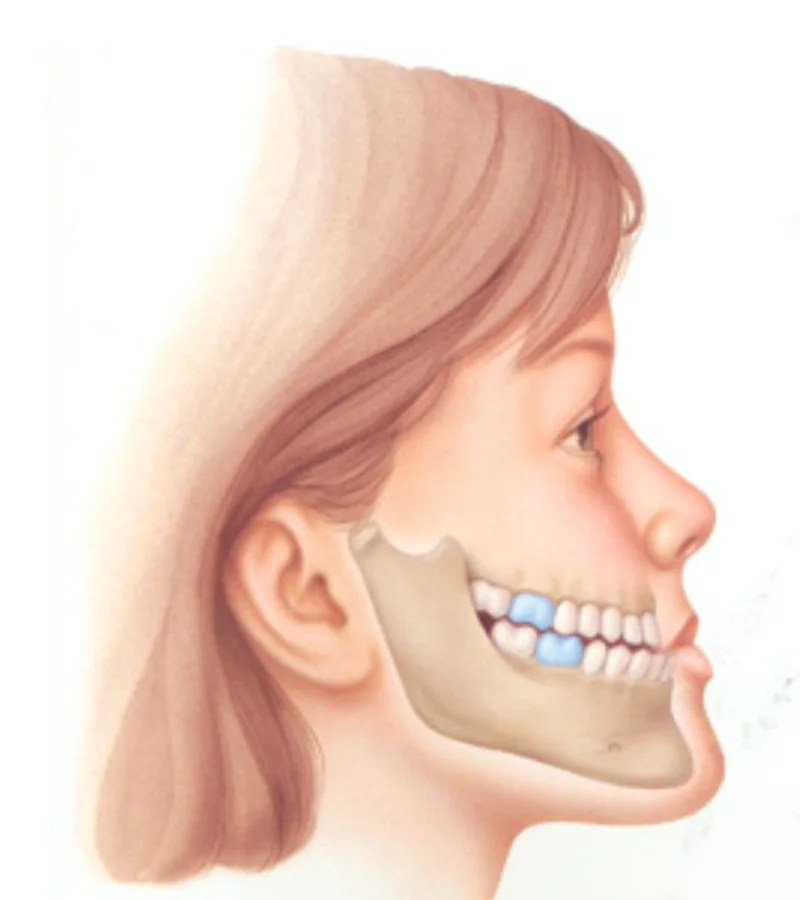 Class 3 underbite
Why Traditional Crossbite Treatment May Not Address the Entire Face
Traditional crossbite treatment often involves orthodontics, clear aligners, palatal expansion, or orthognathic surgery, depending on the patient's age and the severity of the condition.
These treatments can be highly effective and are sometimes necessary.
However, simply straightening the teeth does not always address every concern involving facial appearance, jaw positioning, and bite function.
At Face Dentistry, we ask additional questions:
- Is the lower jaw being guided into an unfavorable position by the existing bite?
- Could a functional jaw shift be contributing to the crossbite?
- Are the upper and lower teeth preventing the jaws from closing comfortably?
- How does the current bite affect chin projection and facial symmetry?
- Can a more favorable dental relationship be established conservatively?
This broader evaluation is the foundation of our face-driven approach.
The Face Dentistry Approach: Establishing a Class I Bite Relationship
What Is a Class I Bite?
A Class I dental relationship generally describes a normal front-to-back relationship between the upper and lower dental arches, traditionally assessed using the molars and canines.
In a properly coordinated bite, the teeth contact in a way that supports efficient chewing, balanced function, and appropriate overjet and overbite.
A Class I relationship is an important orthodontic reference, although it does not by itself guarantee ideal jaw-joint health, facial aesthetics, or long-term stability.
The objective of Face Dentistry is not simply to make the teeth look straight. It is to coordinate the teeth, bite, jaw position, and facial appearance.
Step 1: Evaluating the Face, Jaw, and Existing Crossbite
Dr. Goodman begins with a comprehensive evaluation of the patient's bite and facial structure.
This may include:
- Facial profile and chin projection analysis
- Evaluation of the upper and lower dental arches
- TMJ and jaw movement assessment
- Digital photographs and intraoral scans
- Bite analysis and assessment of tooth contacts
- Appropriate imaging when clinically indicated
The purpose is to determine whether the crossbite is dental, skeletal, functional, or a combination of these factors.
Step 2: Identifying a More Favorable Jaw Position
One of the distinguishing features of Face Dentistry is its emphasis on evaluating jaw position before designing the final restorations.
Using bite records, functional assessments, and appropriate jaw-tracking technology, Dr. Goodman investigates how the mandible moves and where the teeth could potentially meet in a more favorable relationship.
For patients with a functional crossbite, correcting the mandibular shift may improve the way the upper and lower arches relate to one another.
However, not every crossbite can be corrected by repositioning the mandible. True skeletal discrepancies and significant dental misalignments may require orthodontic or surgical treatment.
Step 3: Designing the Teeth to Meet in a Class I Relationship
Once a suitable, clinically verified jaw position has been identified, the next question is:
Can the upper and lower teeth be designed to meet together in a stable Class I dental relationship?
For selected patients, restorative dentistry may help establish the desired contacts, guidance, and dental alignment.
Depending on the clinical situation, treatment may involve:
- Custom-designed porcelain veneers
- No-prep or minimal-preparation veneers, when appropriate
- Porcelain crowns for teeth that require full coverage
- Selective restorative bite reconstruction
- Orthodontics or Invisalign when tooth movement is needed
The restorations are planned around the proposed functional bite and the patient's facial proportions.
Rather than designing the smile in isolation, the goal is to design the dental relationship around the face.
Step 4: Testing the Proposed Bite Before Final Treatment
At Face Dentistry, planning may include digital simulations, diagnostic wax-ups, provisional restorations, or a reversible trial appliance when appropriate.
These steps help assess the proposed changes before committing to definitive restorations.
A trial can help evaluate comfort, appearance, tooth contacts, and jaw function, although it cannot guarantee long-term stability.
Step 5: Establishing and Maintaining the New Bite
When the proposed position is clinically appropriate and the patient is a suitable candidate, definitive treatment is designed to support the planned dental relationship.
The objective is to create:
- Coordinated upper and lower tooth contacts
- Appropriate anterior and posterior guidance
- A stable, comfortable bite
- Improved dental and facial aesthetics
- A functional relationship that can be maintained over time
Follow-up evaluations and protective appliances may be recommended depending on the treatment.
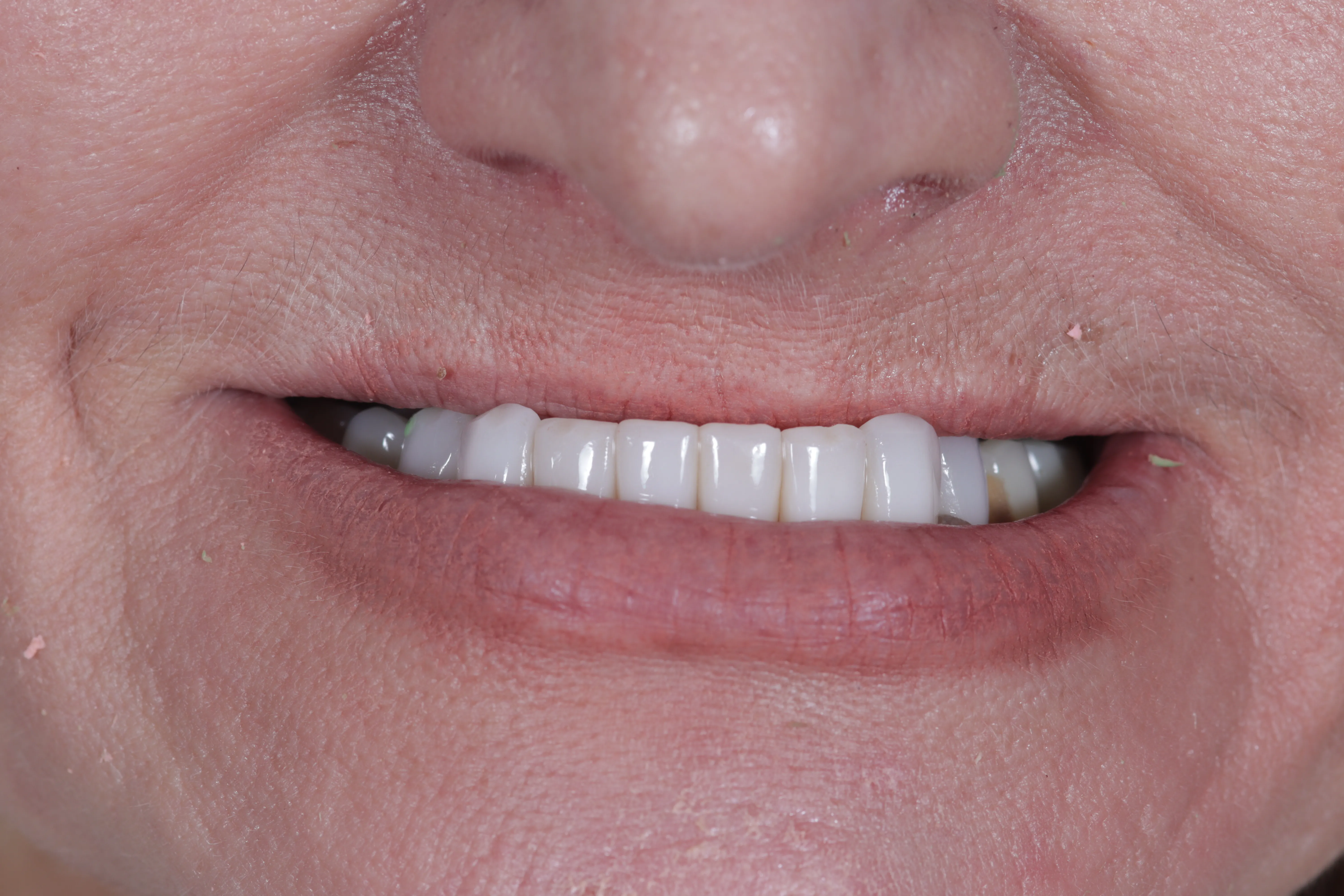
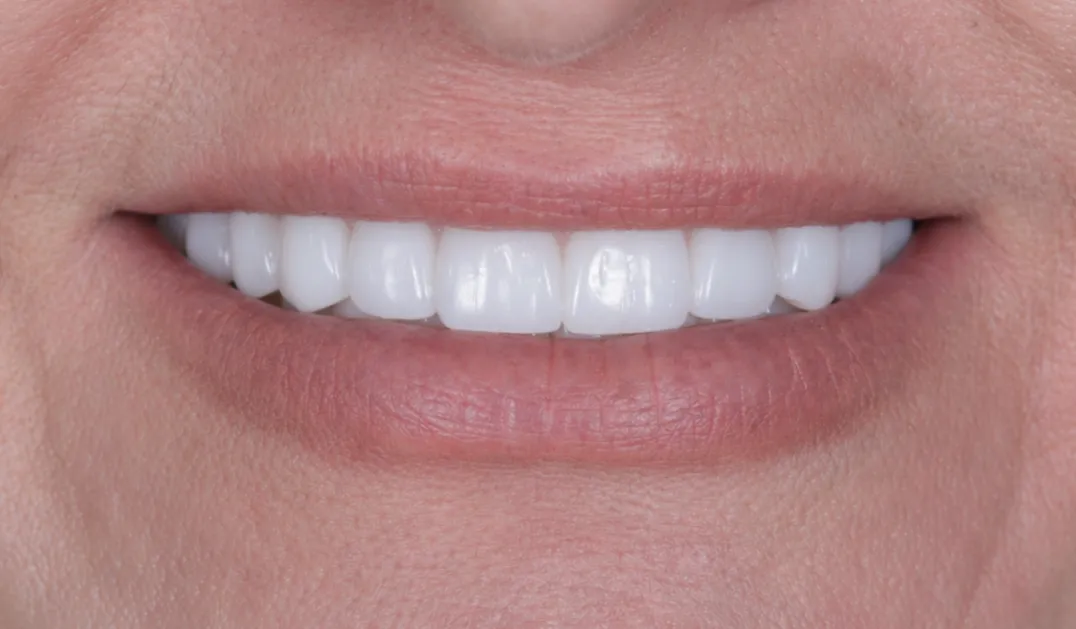
Can a Crossbite Be Corrected Without Braces?
In selected cases, yes.
Not every crossbite requires traditional orthodontic treatment. For certain adult patients with primarily restorative concerns or a functional component to their bite discrepancy, carefully planned restorative treatment may improve the relationship between the upper and lower teeth.
However, porcelain veneers do not physically move tooth roots or correct an underlying skeletal discrepancy.
Patients with significant crowding, narrow upper jaws, skeletal asymmetry, or severe crossbites may benefit more from orthodontics, expansion, or orthognathic surgery.
The appropriate treatment depends on a thorough diagnosis.
Can Face Dentistry Correct a Crossbite Without Jaw Surgery?
For some patients, Face Dentistry may provide a nonsurgical treatment option.
This is particularly relevant when a crossbite involves a functional jaw shift or when restorative changes can establish a more favorable dental relationship without compromising healthy tooth structure.
For patients with substantial skeletal discrepancies, repositioning the teeth through restorative dentistry alone may not provide an appropriate or stable correction.
Dr. Goodman evaluates each patient individually to determine whether a nonsurgical approach is clinically reasonable.
How Crossbite Correction May Improve Your Facial Appearance
A crossbite can influence more than the way your teeth fit together.
Depending on its cause, it may be associated with:
- An uneven or asymmetric jaw position
- An appearance of a protruding lower jaw
- An unbalanced chin profile
- Uneven dental contacts
- A smile that appears shifted or misaligned
When a functional jaw shift is corrected, the position of the mandible at closure may change, potentially improving facial balance.
Restorative changes can also influence smile proportions and the support provided by the teeth.
However, dental restorations do not change the underlying jawbone anatomy, and the degree of facial improvement varies from patient to patient.
What Makes Face Dentistry Different?
We Design Dentistry Around Your Face
Conventional cosmetic dentistry often begins with the appearance of the teeth.
Face Dentistry begins with the relationship between the face, jaw, bite, and teeth.
Dr. Joseph Goodman evaluates the entire functional and aesthetic picture before determining how the teeth should be restored or aligned.
Our philosophy is based on four principles:
- Facial Analysis: Understanding the relationship between the chin, jawline, smile, and facial proportions.
- Functional Jaw Evaluation: Assessing mandibular movement, TMJ function, and how the upper and lower teeth come together.
- Class I Dental Coordination: Planning a favorable relationship between the upper and lower arches whenever clinically achievable.
- Conservative Treatment Planning: Preserving natural tooth structure and avoiding unnecessary procedures whenever possible.
Frequently Asked Questions About Crossbite Correction
Meet Dr. Joseph Goodman — The Dentist Behind Face Dentistry
Dr. Joseph Goodman is a Beverly Hills cosmetic and restorative dentist with more than 25 years of clinical experience.
With dental education in Germany and the United States, Dr. Goodman combines aesthetic dentistry, restorative treatment planning, and functional bite evaluation.
His approach emphasizes conservative dentistry, preservation of natural teeth, and the relationship between dental function and facial appearance.
Through Face Dentistry, he focuses on patients seeking solutions for crossbites, underbites, overbites, recessed jaws, and other bite-related concerns.
Discover Whether Face Dentistry Can Correct Your Crossbite
Your crossbite may involve more than the position of your teeth. The way your upper and lower jaws meet can influence your bite, smile, and facial appearance.
At Face Dentistry, we evaluate whether a more favorable dental relationship can be established while respecting your natural anatomy, jaw function, and long-term oral health.
For selected patients, a nonsurgical restorative approach may be an alternative to more extensive treatment.
Schedule Your Face Dentistry Consultation
Face Dentistry — The Facelift of Dentistry
Dr. Joseph Goodman
269 S. Beverly Drive, Beverly Hills, CA 90212
Phone: 424-DENTIST (424-336-8478)
Website: https://facedentistry.com
We design dentistry around your face.