FACE Dentistry · Beverly Hills
Open Bite Correction Without Surgery
What Is an Open Bite?
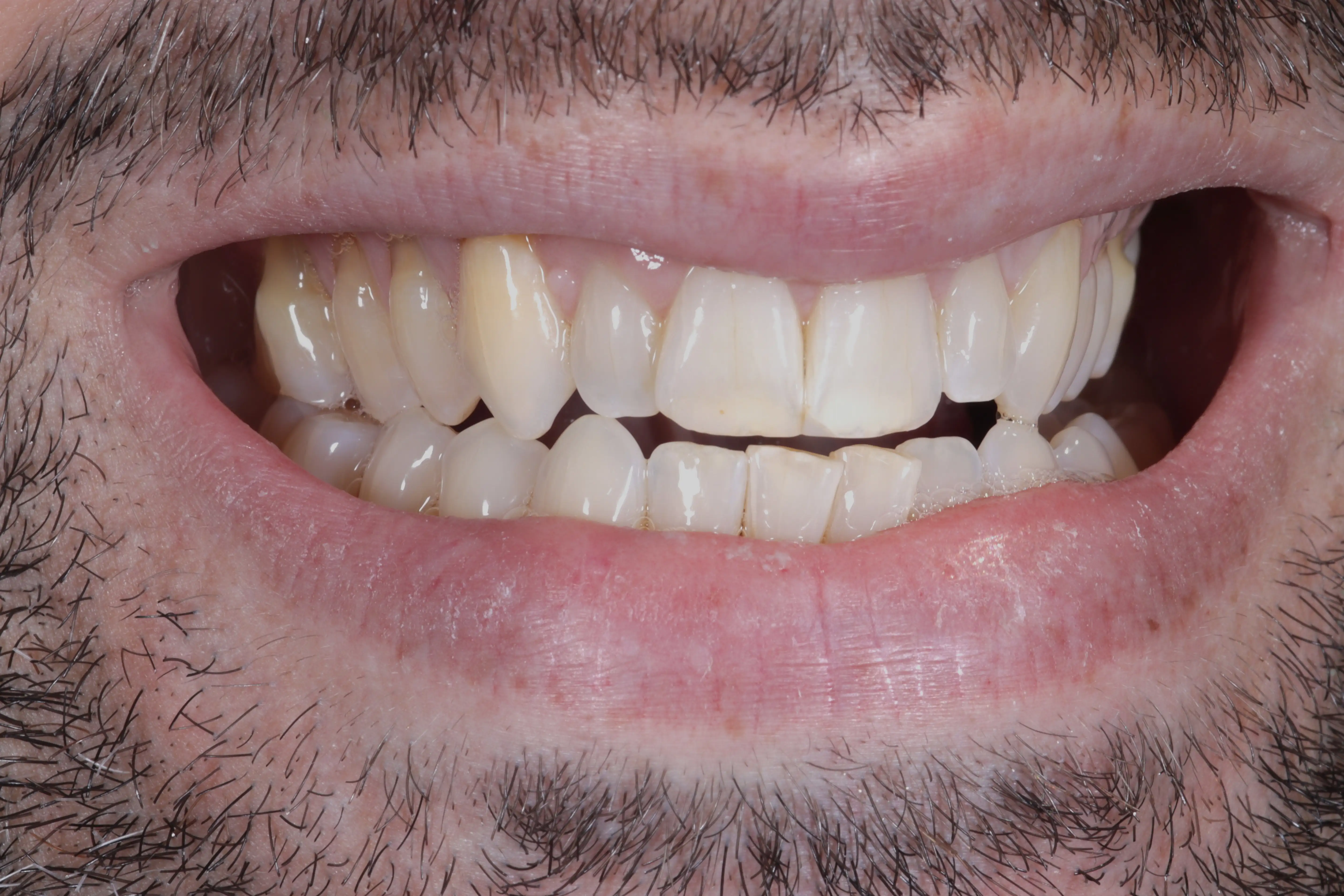
An open bite is a type of malocclusion in which certain upper and lower teeth do not make contact when the jaws are closed.
In a normal bite, the upper and lower teeth come together in a coordinated relationship that allows comfortable chewing and biting.
With an open bite, a visible gap may remain between the teeth, even when the back teeth are touching.
Types of Open Bite
Anterior Open Bite
An anterior open bite occurs when the upper and lower front teeth do not touch while the posterior teeth are in contact.
Patients may experience difficulty biting into sandwiches, pizza, apples, or other foods using their front teeth.
Posterior Open Bite
A posterior open bite occurs when the back teeth fail to make contact, even though other teeth may touch.
This can affect chewing efficiency and the distribution of biting forces.
Skeletal Open Bite
A skeletal open bite is associated with the underlying growth pattern and relationship of the upper and lower jaws. It may involve increased lower facial height, jaw rotation, or other skeletal discrepancies.
Dental Open Bite
A dental open bite primarily involves the position or eruption of teeth rather than a major skeletal discrepancy.
Understanding the type and cause of an open bite is essential because different conditions require different treatment approaches.
What Causes an Open Bite?
An open bite may develop due to several factors, including:
- Genetic jaw growth patterns and skeletal development
- Prolonged thumb sucking or pacifier use during childhood
- Tongue-thrusting habits or abnormal tongue posture
- Tooth eruption or alignment problems
- Differences in upper and lower jaw development
- Certain airway-related or oral functional patterns
- Changes in tooth position or jaw relationships over time
In some patients, an open bite develops gradually. In others, it has been present since childhood.
The first step toward treatment is identifying whether the problem is primarily dental, skeletal, functional, or a combination of these factors.
Can an Open Bite Be Corrected Without Surgery?
Not every open bite requires orthognathic jaw surgery.
Depending on the severity and underlying cause, treatment options may include orthodontics, Invisalign, habit correction, restorative dentistry, or a combination of approaches.
At FACE Dentistry, Dr. Goodman evaluates whether a patient's existing jaw relationship, tooth structure, and facial proportions allow for a conservative, nonsurgical treatment plan.
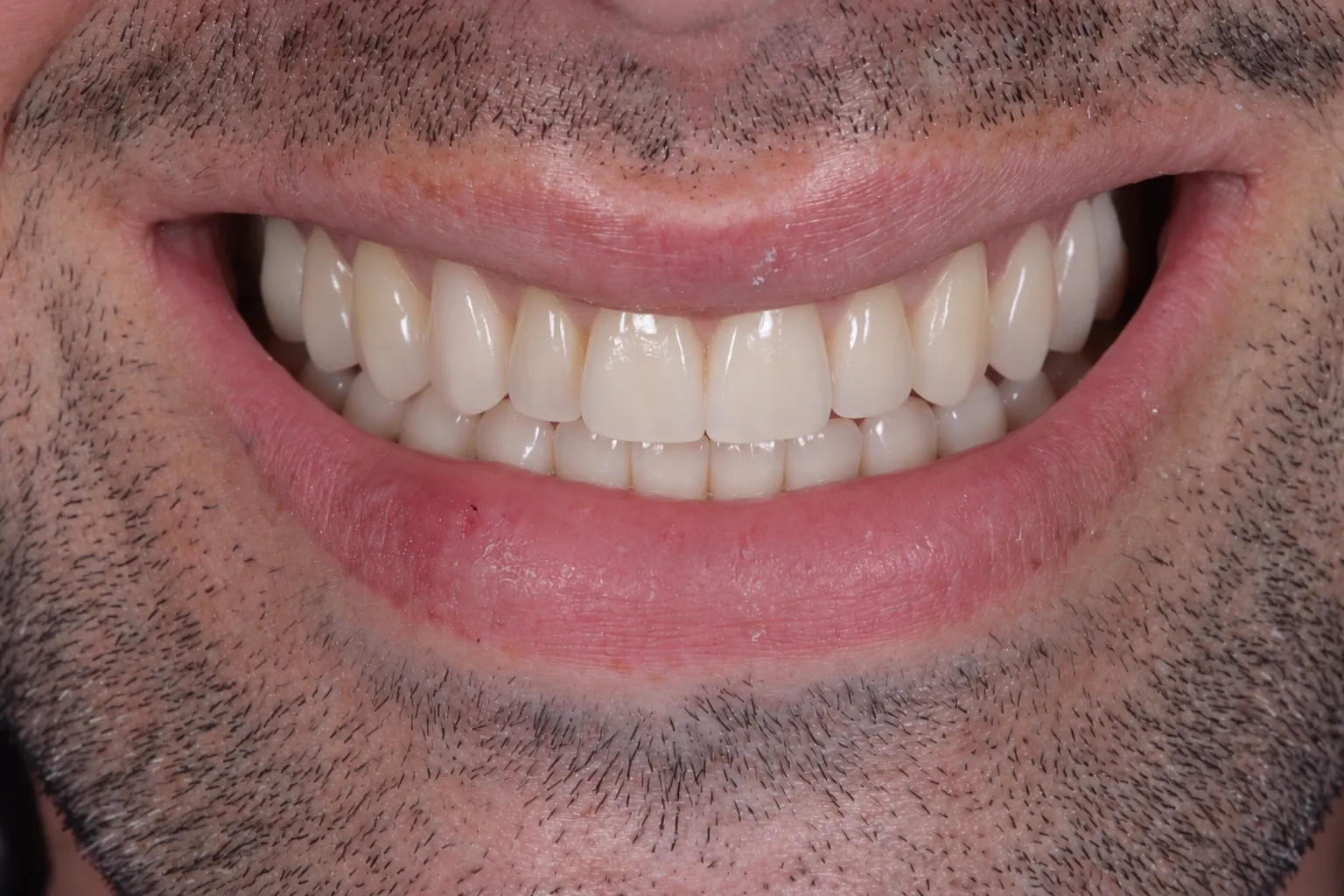
For selected patients, carefully planned restorations and bite rehabilitation may improve dental contact and the visible appearance of an open bite without surgical repositioning of the jawbones.
However, significant skeletal open bites may still require orthodontic treatment combined with orthognathic surgery to achieve a stable skeletal correction.
The FACE Dentistry Approach to Open Bite Correction
We Look Beyond the Teeth
Traditional dental treatment often begins by examining the alignment and position of the teeth.
At FACE Dentistry, our evaluation begins with a broader question:
How do the teeth, jaw position, chin, TMJ, and facial proportions work together?
Dr. Goodman considers the entire lower facial structure when developing a treatment plan.
The evaluation may include:
- Facial Proportion Analysis
We examine the relationship between the upper and lower face, chin projection, jawline, lip position, and smile.
- Bite and Occlusal Evaluation
We analyze how the upper and lower teeth meet, where contact is missing, and whether the bite is functionally balanced.
- TMJ and Jaw Position Assessment
We evaluate jaw movement, joint function, and whether changes in mandibular position may be appropriate.
- Digital Smile and Facial Planning
Digital photography, imaging, and diagnostic records help us visualize potential changes in the smile and facial appearance.
- Restorative Treatment Planning
When clinically appropriate, porcelain veneers, crowns, or other restorations may be considered to establish improved tooth contacts and support the planned bite relationship.
Our goal is to improve dental function while considering the harmony of the smile and face.
What Is the TMJ Tracking System?
The temporomandibular joints connect the lower jaw to the skull and allow the movements necessary for speaking, chewing, and opening and closing the mouth.
At FACE Dentistry, Dr. Goodman uses jaw-position assessment and tracking technology as part of selected complex bite evaluations.
These measurements may provide additional information about mandibular movement and jaw relationships.
By combining this information with clinical examination, dental records, and facial analysis, Dr. Goodman can evaluate potential restorative bite positions.
Important: Jaw tracking is a diagnostic aid. It does not, by itself, establish one universally ideal jaw position or guarantee that advancing the mandible will correct an open bite or improve TMJ health.
Open Bite Correction With Porcelain Veneers
Can Veneers Close an Open Bite?
In selected cases, porcelain veneers or other restorations can help close a limited anterior dental gap by changing the shape, length, and contact relationships of the teeth.
At FACE Dentistry, veneers are considered as part of a comprehensive functional and aesthetic plan rather than simply a way to make teeth appear longer.
The treatment design considers:
- Tooth proportions and smile aesthetics
- Available enamel and tooth structure
- Occlusal contacts and biting forces
- Speech and phonetics
- Facial proportions
- Long-term restorative maintenance
Not every open bite is suitable for veneers. Excessive lengthening of teeth can create unfavorable proportions, functional interference, or increased restorative stress.
For larger dental or skeletal discrepancies, orthodontics or surgical treatment may be more appropriate.